


04.04.2016


Known as “the most beautiful city that Danube flows within”, Budapest shone out as one of the most distinguished classical music centres of Europe, in post-communism period. Especially from the beginning of the 21st century, Hungarian State Opera, with its boastful building on Andrássy Boulevard, which is outstandingly beautiful both in interior and exterior, recently renovated Franz Liszt Academy of Music Concert Hall, Erkel Theatre and Müpa, which opened its doors again in a recent date like 2005 have been adding momentum to Budapest’s music scene day by day.
Putting 10 years behind itself, the name Müpa is short for Palace of Arts (Művészetek Palotája). It was built on riverside of Danube, in the region Ferencváros, which is on the south side of the city centre, and it is a majestic building designed by Hungarian architects. Müpa’s building and the newly built National Theatre across it, together they constitute Budapest’s Lincoln Center together. At the beginning of the last month, I was invited to a world premiere of a lesser known opera of a baroque period French composer in this “palace”, along with a group of French music writers and journalists. You may be surprised. Because when we consider a place where a lesser known French baroque period opera would be performed, for instance, Palace of Versailles would naturally be the first place that comes to mind. I mentioned the name of Palace of Versailles because we owe the staging of Jean-Joseph Mondonville’s (1711-1772) Isbé opera in Budapest to Centre of Baroque Music Versailles (CMBV) as much as Müpa and Hungarians.
French violinist and composer Mondonville is a young contemporary of Jean-Philippe Rameau, who is considered to be one of the greatest creators of French opera. Unlike Rameau, Mondonville is recognized mostly by his religious choral works like motets, rather than operas. There is also a third name besides the two names I mentioned above that we owe Isbé opera. It is the Hungarian orchestra conductor György Vashegyi (b.1970) who took this outstanding work from the dusty shelves of history and presented it to humanity again. Before going to Budapest, I had so little information about Vashegyi, and the information I learned about him during my trip and my observations I had while interviewing him there made me believe that despite his young age, I met one of the most important musicians of our age. In his own words, Vashegyi is among the third wave of early music conductors of Hungary. He founded Orfeo Orchestra and Purcell Choir in 1990, which are the foremost among the most important early music ensembles of Hungary. Vashegyi has a versatile career and besides Orfeo-Purcell duo, he also conducts operas from different periods in Hungarian State Opera, though his real passion is early period music in which he invested 25 years of his life.
Isbé that we watched on March 6th, Sunday evening at the famous Béla Bartók National Concert Hall of Müpa (pictured by Serhan Bali, below), affected me deeply in the aspects of both instrumental and vocal, in a way that cannot be erased easily neither from my mind nor my heart. Some may know that operas which were composed in baroque period, in other words in 18th century, are not easy to understand and swallow since they are long, their recitatives are dense and their librettos, in other words their plots are extremely complex; these kind of operas are within expert fans’ field of interest, whom are called as “connoisseur” in Frankish. As rather a seasoned listener of the later periods in music, I have to confess that I have only watched a few baroque period operas entirely on stage till today, but I have always enjoyed listening to the complete recordings of the operas from this period. I also had a similar experience when I watched Farinelli’s teacher Porpora’s newly brought out opera in Innsbruck Festival of Early Music last summer.
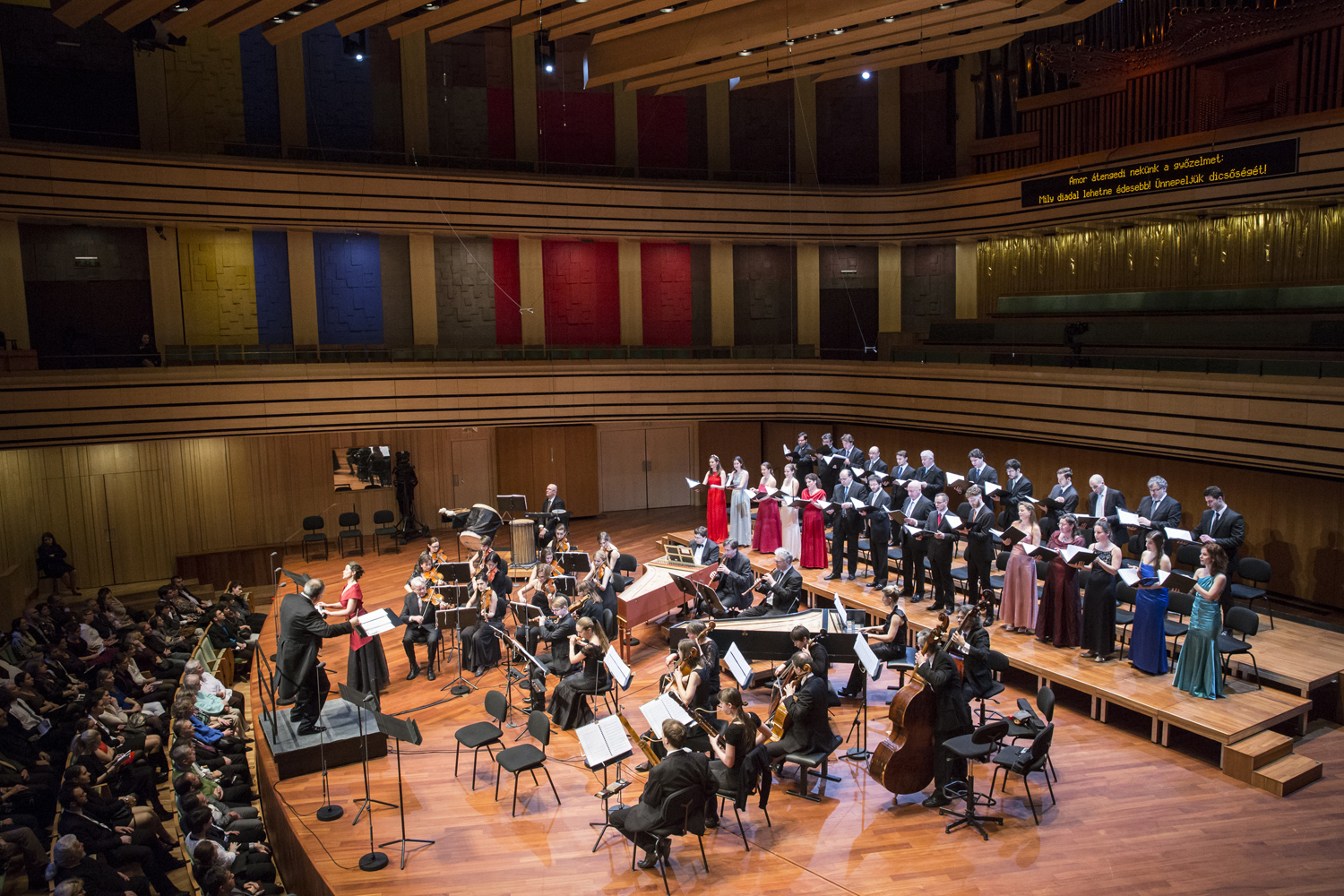
Orfeo Orchestra and Purcell Choir were on the stage of Béla Bartók National Concert Hall (Photo: Zsófia Pályi, Müpa Budapest)
Isbé was staged in Budapest in concertante format, which means without the décor and costumes. This enabled our concentration to be focused completely on the orchestra, the conductor and the soloists, as it always happens with concertante performances. We, the music writers and critics, use the term “like a veil” when we are reviewing the performance of the velvety strings in a concert. We listened to a performance worthy of this expression that evening at Béla Bartók National Concert Hall, from the fresh strengths of Orfeo and Purcell conducted by György Vashegyi. Inside the auditorium of the concert hall which has really outstanding acoustics, it reached to our ears combining with soft strings and winds instruments’ sounds that their sonority are kept within a certain consistency which is indigenous to the early period musical ensembles, and with the performances of a vocal staff comprised of several distinguished vocalists.
Katherine Watson’s Isbé, Reinoud Van Mechelen’s Coridon, Thomas Dolié’s Adamas, Chantal Santon-Jeffery’s Desire and Charite, Alain Buet’s Iphis and Hamadryad, Blandine Folio-Peres’ Fashion and Céphise, Rachel Redmond’ Ámor, A Shepherd, Clyméne and A Nymph, Artavazd Sargsyan’s Tircis, Hamadyrad and Forest God, Komáromi Márton’s Second Hamadyrad… Although there were some voices that shone out from the rest, it was like all the vocalists were chosen meticulously for their roles. Katherine Watson, Reinoud Van Mechelen and Thomas Dolié were the vocal stars of the evening. All three of them had wonderful voices with exceptional timbres and had fine execution of their parts. Dolié’s part was one of the most taxing in the whole opera and though he’s quite young he was very successful in the characterization of his role and I must especially underline his broad range of voice and his mastery in colouring it. On the other hand, Artavazd Sargsyan’s haute-contre (High tenor/No castratos were allowed in French opera genre) type voice was a pure discovery for me. I took note of this young Armenian-French vocalist and will follow his unique voice. At this point, Center Music Baroque De Versailles (CMBV) steps in. CMBV’s role as a partner of this project is to engage French vocalists that will play a part in the performance. French baroque opera is one of the areas in the early period music that requires expertise, so CMBV’s undertaking the sponsorship of French vocalists for this project is very important.

Conductor György Vashegyi (Photo: Zsófia Pályi, Müpa Budapest)
György Vashegyi’s conducting was captivating from beginning to end. His meticulous approach to the score, his concern for the orchestral and vocal nuances are all exemplary. We witnessed a first rate interpretative force on the Müpa stage that night. Apart from the accompaniments, all of the orchestral parts; tambourin’s, sinfonias, airs were elegantly played. The sinfonia in the fourth act was especially exquisite with its muted strings evoking a fairy tale atmosphere. On the other hand I cannot miss out the ‘drum show’ of the last act.
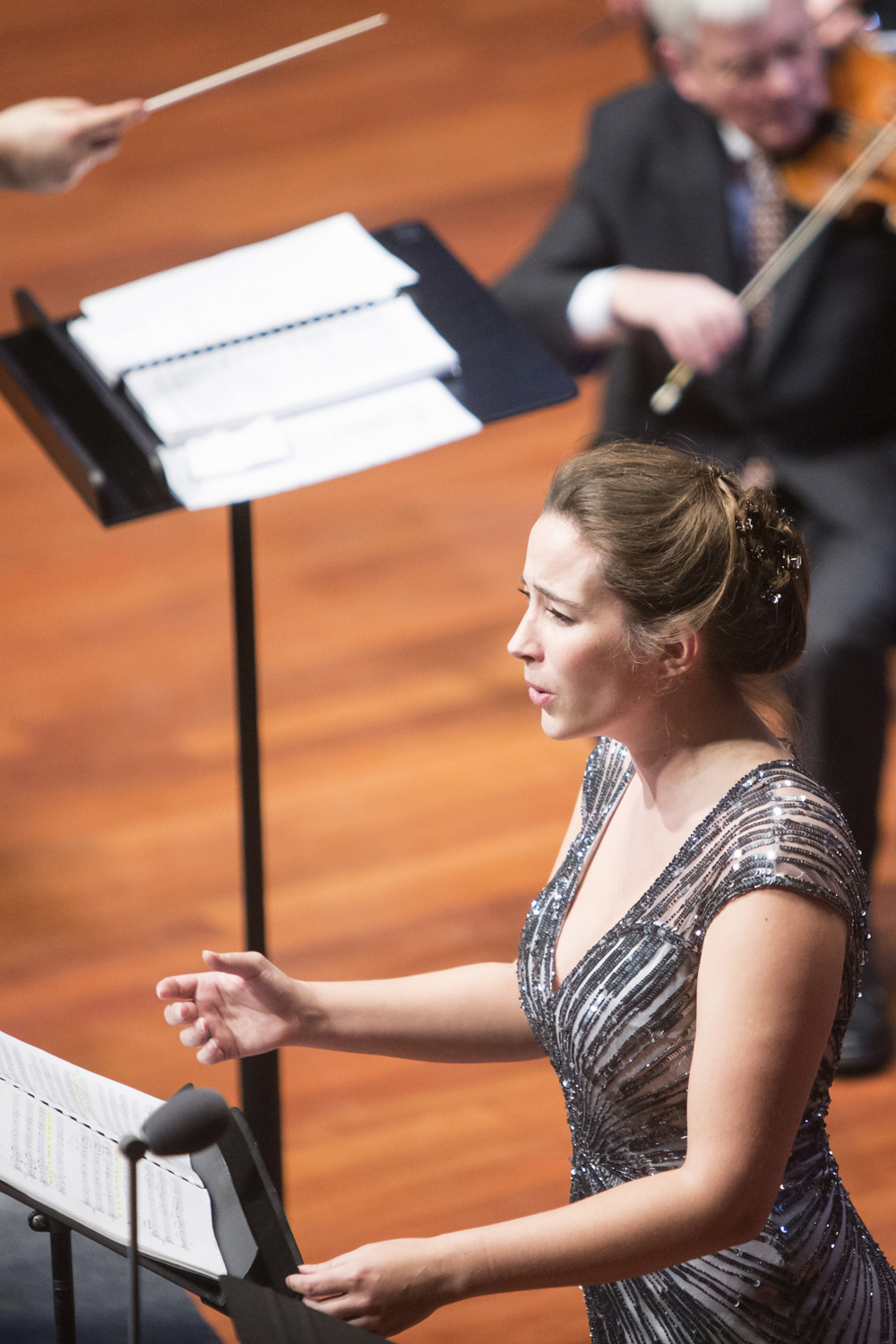
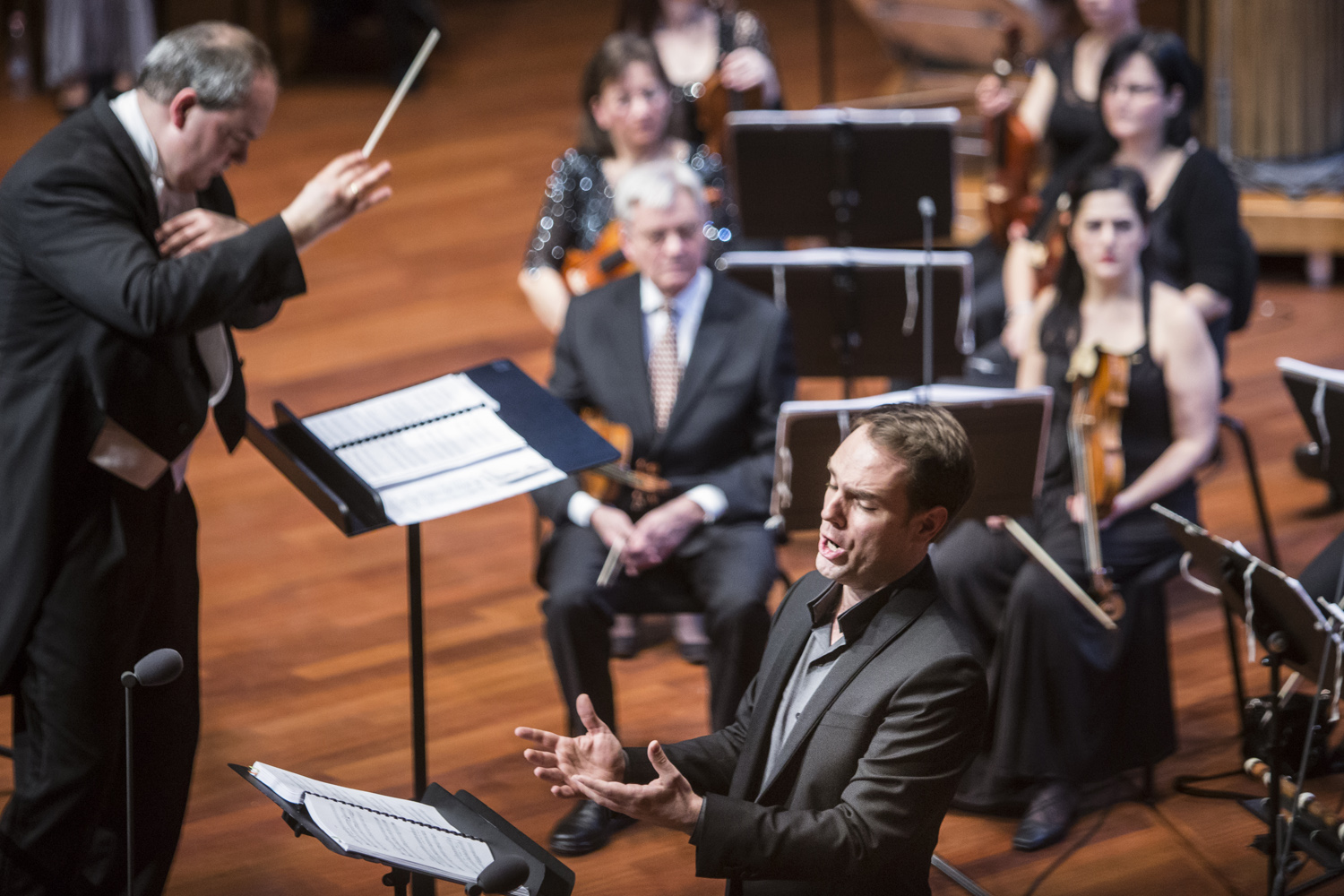
Katherine Watson (top) and Thomas Dolié (Photo: Zsófia Pályi, Müpa Budapest)
Vashegyi’s strong relations are not limited by only France and Versailles. His ensembles record for Glossa. After the performance we have watched at the evening of March 6th all the performers that carry out a duty on stage conducted by Vashegyi, recorded Isbé for two days for this Spanish record label again at the same hall. The recording that I could already passionately recommend to the fans of this genre will be released at the beginning of next year.
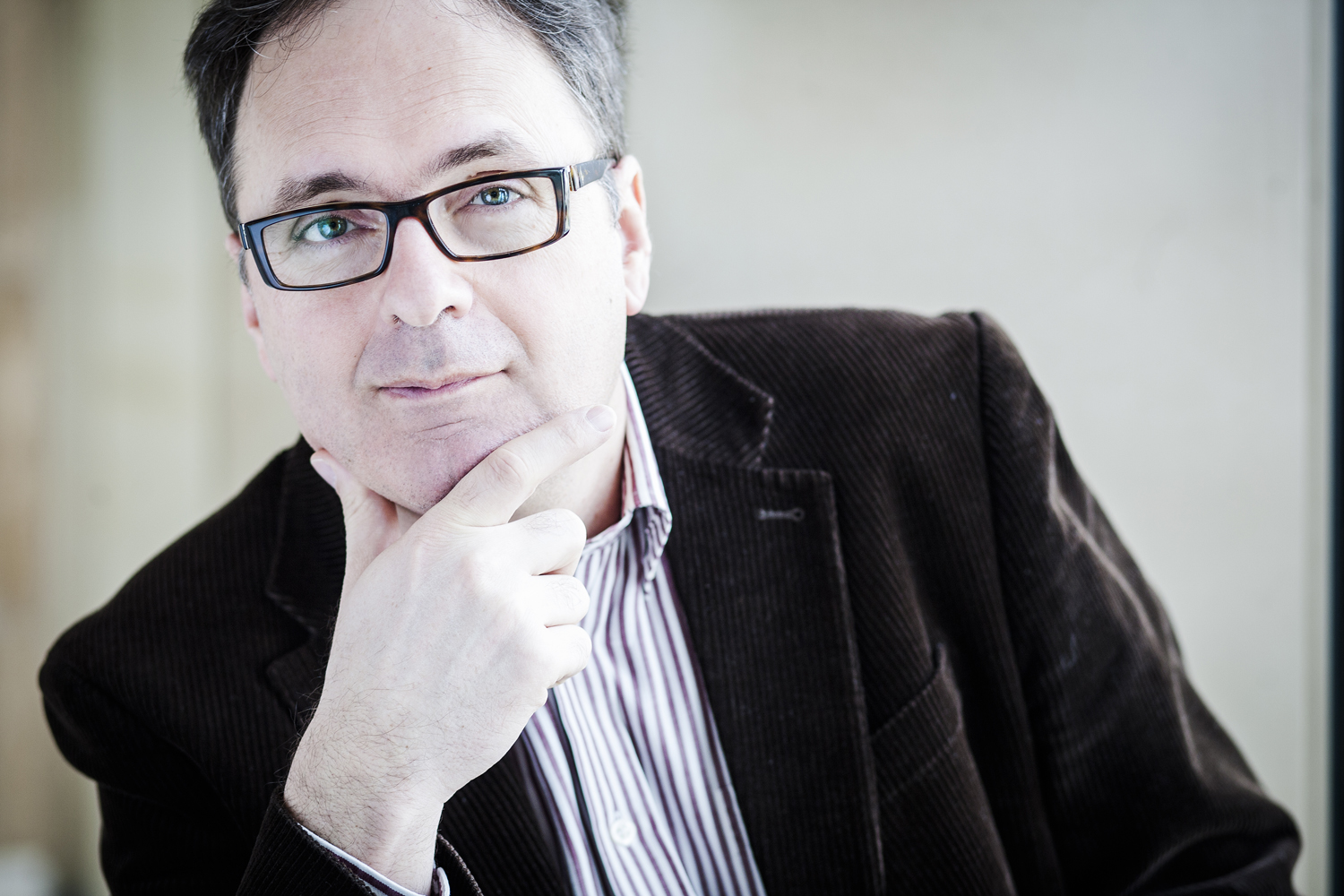
Csaba Káel, Müpa CEO (Photo: Szilvia Csibi)
1.656 seated Béla Bartók National Concert Hall where we watched the concert, has gained a reputation by having the best acoustics and being one of the most elegant concert halls in the world. The fact that Müpa, which embodies the hall, being designed and built by partners comprised of Hungarian companies is praiseworthy and sublime from the point of Hungarian citizens. Müpa’s simple aesthetics with modernist lines is in such contrast with National Theatre building that I mentioned at the beginning of my article, which is the reminiscent of the five star hotels’ architecture on our south shores, flashy yet completely lacking taste. One of the two important features of this auditorium that makes it renowned among its kind is that the wooden panels surrounding the stage from above are all painted in harmonious and vibrant colours. We had the opportunity to experience the acoustical setting which is another feature of the hall, that carries the signature of the late Russell Johnson (1923-2007), who is considered to be one of the biggest names of his area and we had the opportunity to verify the compliments in person. Of course, since it is customary in these types of concerts, the role of the huge canopy, which normally stands near the ceiling above the stage, being pretty lowered as a necessity of the early period music concerts in order to avoid sound to escape for healthy listening experience, should not be forgotten.
According to the information I obtained from Müpa’s CEO Csaba Káel, Müpa has 18 million Euros of budget annually which can be thought as a very high amount. Stating that they are ranked as the last one among the ECHO members that put all the concert halls together under the same roof, Káel thinks this is definitely not a high amount. While the one third of the budget is donated by the state, the two thirds of it are coming from ticket sales and sponsorship incomes. Müpa is also one of the main places of the famous Budapest Spring Festival that is held on spring months. Csaba Káel is also in charge of this festival. Besides the spring festival, another important event hosted by Müpa is the rather short Wagner Festival in which the composer’s Ring cycle is performed in every June by important soloists of our age and Hungarian Radio Symphony Orchestra, conducted by Adam Fischer. Now that we mentioned Fischer family, I suggest that you should definitely listen to Budapest Festival Orchestra, conducted by Adam’s younger brother Ivan, at Béla Bartók National Concert Hall, thus feel the pleasure of listening to one of the most important symphony orchestras of the world in one of the best concert halls with the best acoustic…
Serhan Bali, Budapest
Inside and outside photos of Müpa (Courtesy of Mpa Budapest)


BENZER HABERLER


-
- ANDANTE ONLINE
- E-Issue
- This month's Andante
- Previous issues
- Point of sales
- Masthead
-
- REVIEW
- Hi-Fi
- Books
- Concerts & Opera
- CD & DVD


